

Every Child Deserves a Safe School and a Safe Road to It
Too many children still learn under leaking roofs and beside cracked walls.
Safe school infrastructure in India
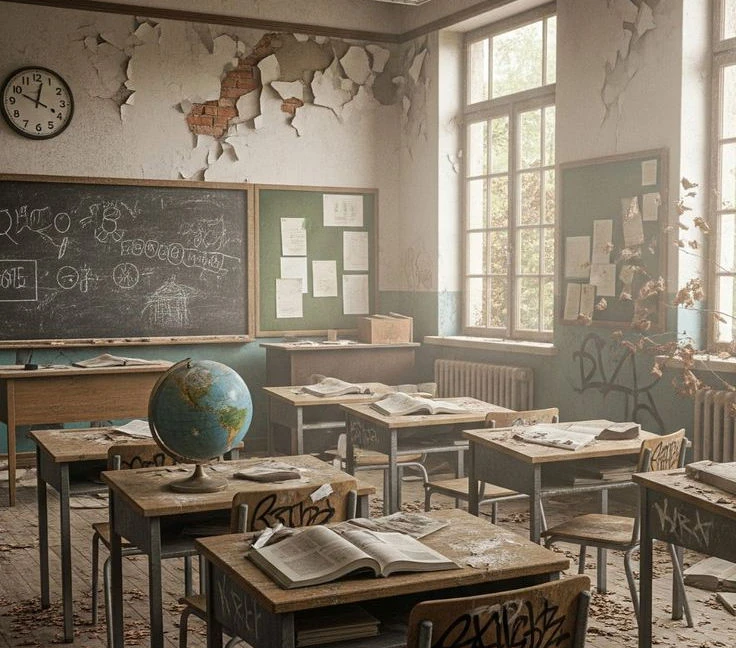
Every child has the right to learn in a safe, secure, and well-maintained environment.
Yet many schools across India continue to face infrastructure deficiencies such as damaged buildings, cracked walls, leaking or unstable roofs, weakened ceilings, unsafe staircases, inadequate sanitation facilities, faulty electrical systems, and neglected classrooms.
In severe cases, structurally unsafe buildings or the absence of proper structural safety certifications can pose serious risks to the lives and well-being of students, teachers, and staff.

We are committed to identifying and documenting unsafe conditions in schools through community reporting, volunteer inspections, and expert assessments wherever appropriate. Working responsibly with local communities, engineers, education professionals, and the concerned authorities, we aim to bring hazardous infrastructure to immediate attention and advocate for timely inspections, repairs, maintenance, and, where necessary, structural safety evaluations by qualified professionals.
The standard every school should meet
Our objective is to promote safer learning environments so that every child can pursue their education with confidence, dignity, and security. We believe that preventing accidents is a shared responsibility, and that every school should meet acceptable standards of safety, hygiene, accessibility, and structural integrity before it is entrusted with the education of our children.
Get involved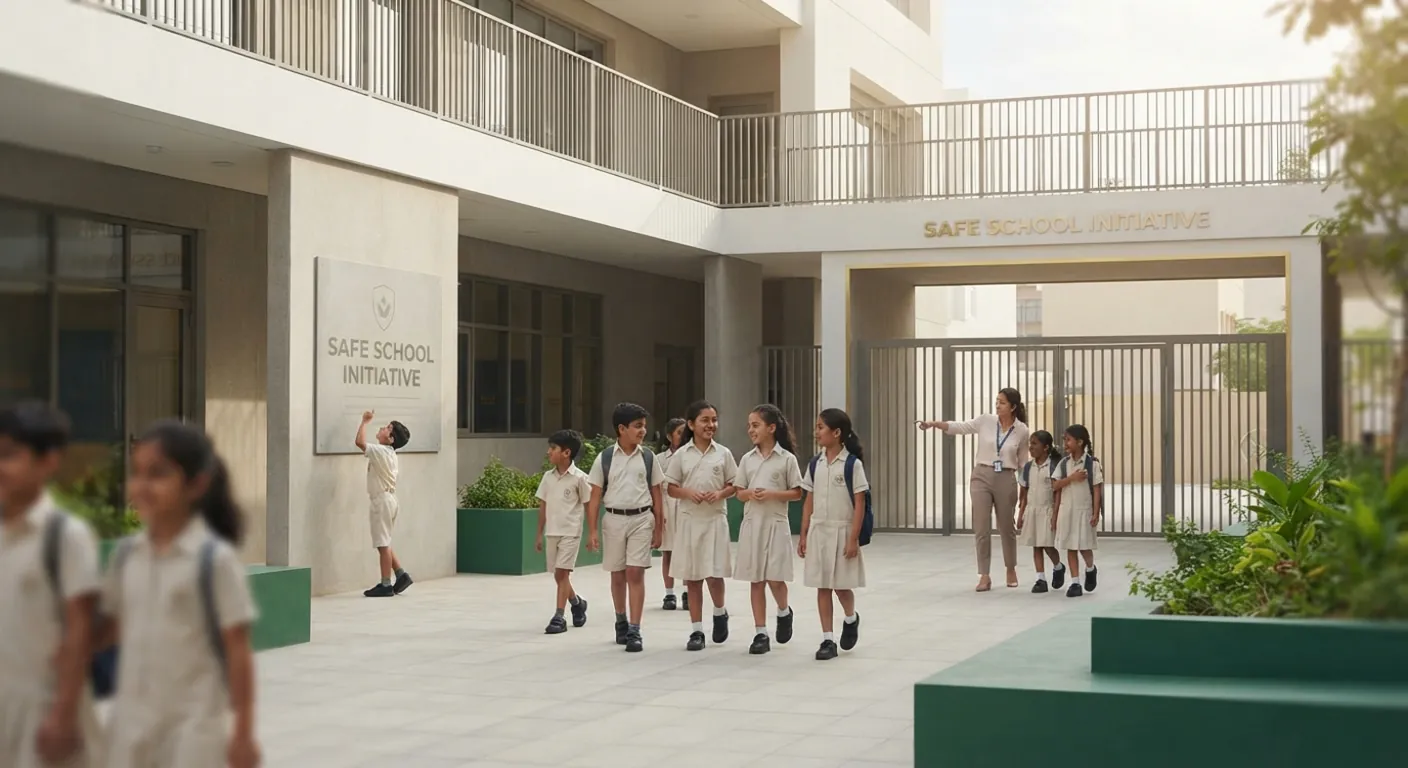
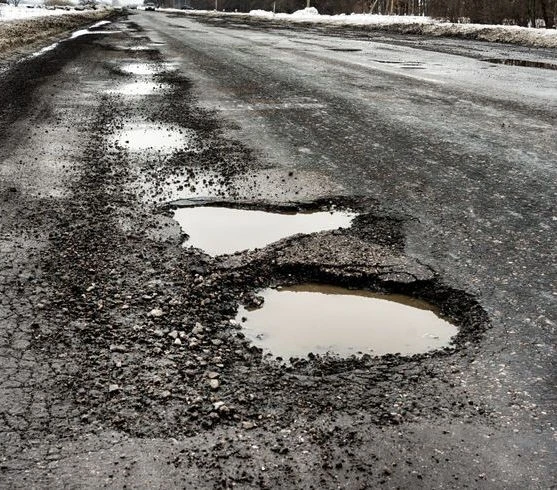
"A village with safe roads is a village with safer futures. Children should not have to risk their lives just to reach the classroom."
Safe roads for school children
A safe school is only half of the journey. Road crashes kill nearly 45 children and adolescents in India every day, and a national child road safety roadmap from UNICEF and NIMHANS Bengaluru calls for mandatory road safety audits near schools and designated safe-school zones.
Source: “Road accidents take 45 children’s lives in India every day, says new study”, The News Minute, 4 February 2025, reporting the UNICEF–NIMHANS roadmap (16,443 deaths recorded in 2022).
We are committed to bringing the same approach we use for school buildings to the roads children walk, cycle and ride to school: community reporting of broken footpaths, potholes, missing crossings and speeding near school gates; documentation by volunteers; and constructive advocacy with the concerned authorities for school-zone safety audits, traffic calming and safe crossings.
In Bangalore (Bengaluru), PCI’s home city, that means pressing for better roads around schools: durable resurfacing, continuous footpaths and safe crossings near school gates.
In classrooms, our life skills education also teaches road safety to students themselves.
Safe schools and safe roads: questions
How can roads be made safer for school children in India?
Safe roads for school children in India start with road safety audits around schools, designated safe-school zones, lower speeds and traffic calming near school gates, continuous footpaths, marked and supervised crossings, good street lighting, and road safety education for children and drivers alike.
What does PCI do about unsafe school buildings?
We identify and document unsafe conditions through community reporting, volunteer inspections and expert assessments, and work with local communities, engineers, education professionals and the concerned authorities for timely inspections, repairs and maintenance.
How can I report an unsafe school or school route?
Email mail@pci1.org with the location, photographs and a short description, or join as a volunteer to help document unsafe conditions in your area. In an emergency, contact the local authorities first.